January has been extremely germy for our family. I don't quite get why, with the mild climate here on the central CA coast, we still get the extremely immune compromised winter months. On one hand, its convenient for our human body study, as its been driving home lots of specific immune system questions. When J, my four year old was throwing up with the stomach bug, he repeatedly asked me, "What exact virus is in me? When will my white blood cells kill the virus?" It was kind of heart breaking and amazing at the same time.
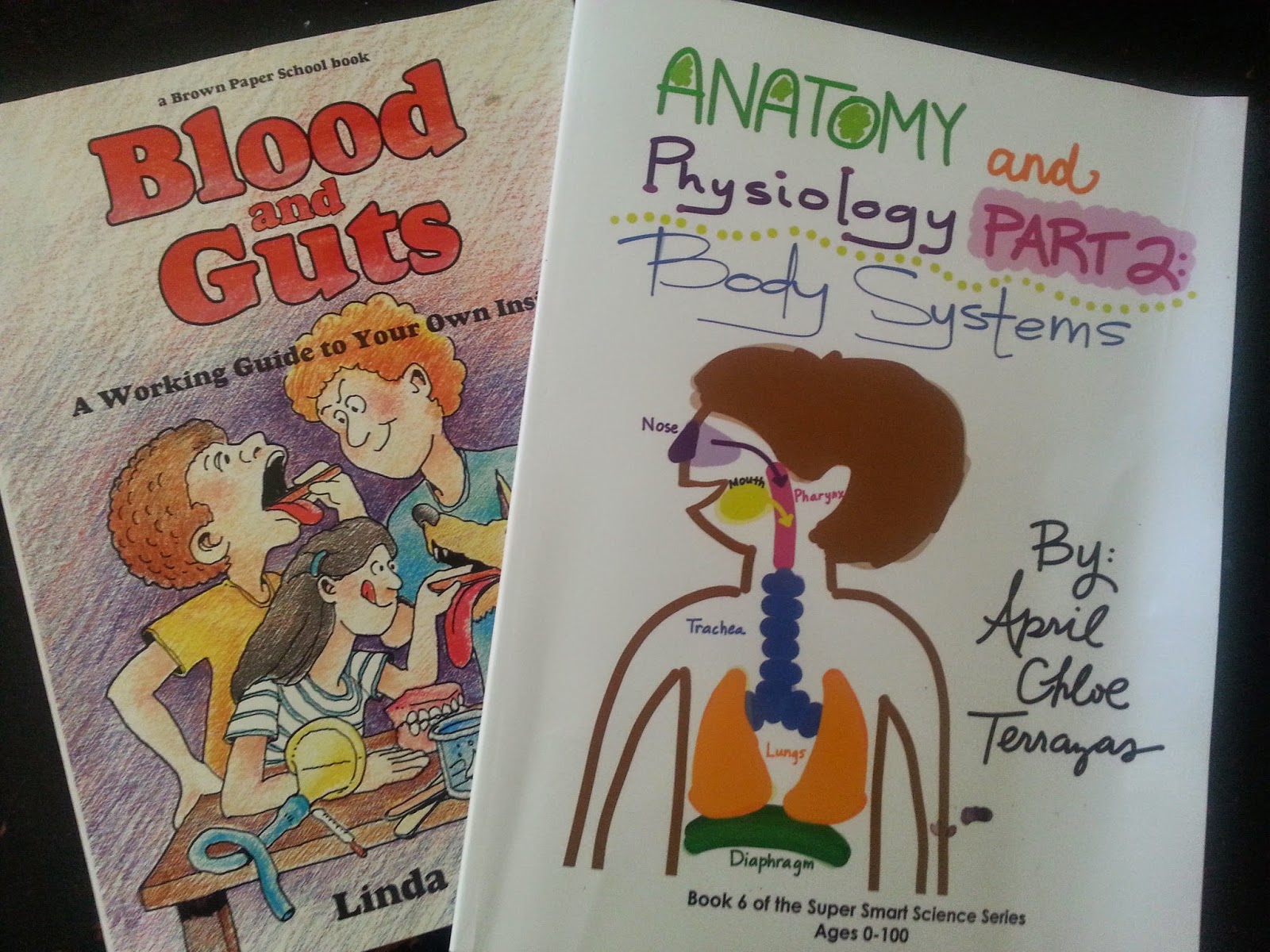
Some of our Anatomy study books
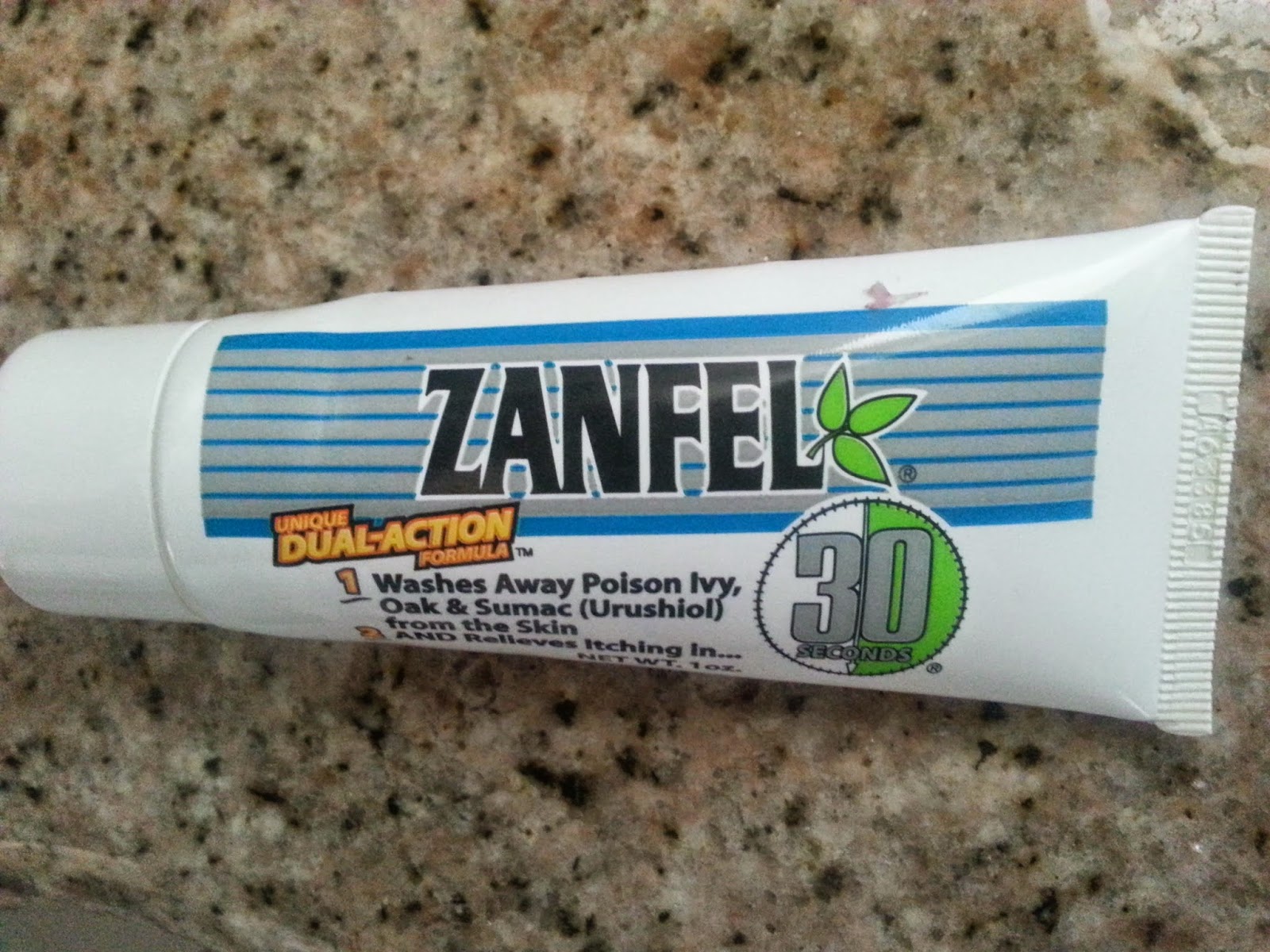
Because of the aforementioned bout of stomach flu (which ripped through the whole family), we had to put off celebrating my oldest's birthday with her buddies, and then I had bronchitis for another week. More fodder for immunity study (or lack thereof!). Finally we had the party - an enchanted forest party at my daughter's favorite fairy grove. Everyone got Poison Oak. They do know what it looks like, but after years of drought, the sticks of it look kind of weird and were covered in new grass - well, long story short, the girls were pretty pathetic. But I have a new tool in my arsenal, thanks a tip from my dentist's office manager, who saw my daughter when we came in and told us to go get this stuff post haste. Its stupid expensive ($40 at my local pharmacy, but about half that on Amazon - I'm definitely planning on keeping some on hand - it worked great and saved my day/week).
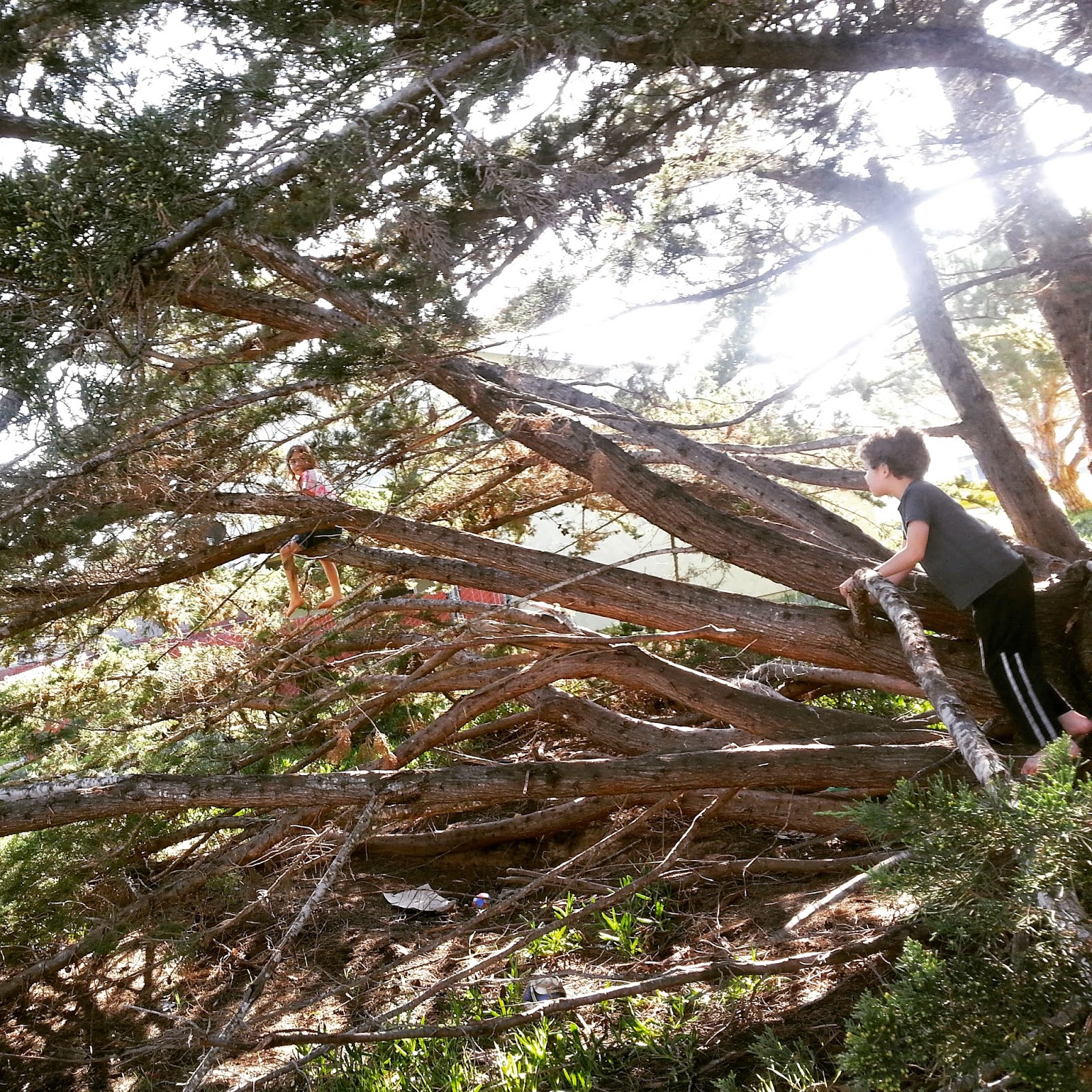
Its gotten them back outside in trees where they belong!
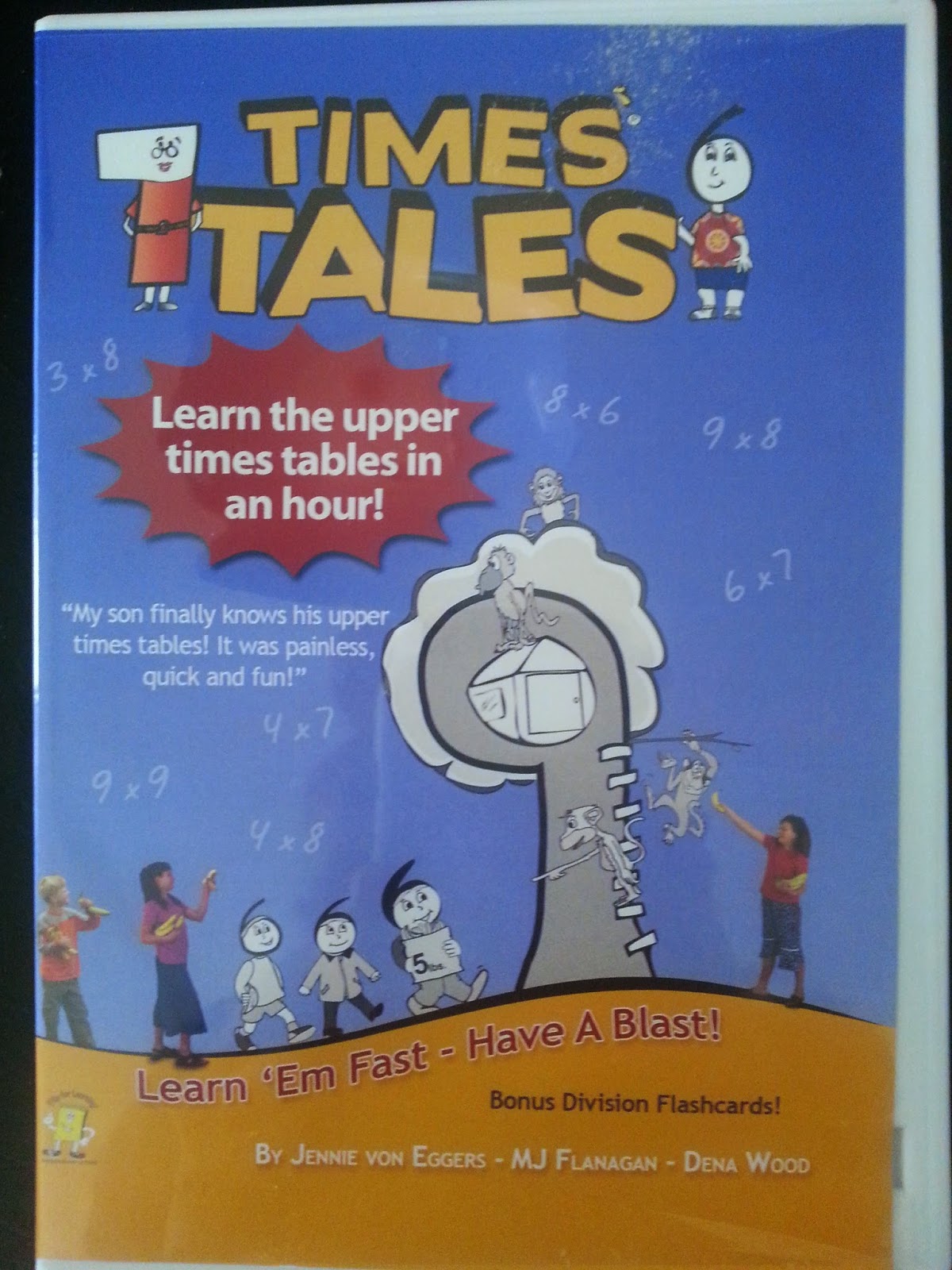
We also did this DVD, which I love with the heat of a thousand suns:
...because *suddenly* both my 8 and 10 year olds know their multiplication and division facts.I would not say "in an hour,"
that's a bit extreme, but after watching the DVD a few times and reviewing their flash cards a few times - DONE. Which is a very different experience than we had with our visual learner and the dreaded addition/subtraction facts (or that time I accidentally gave my kid math PTSD). I have both an extreme visual spacial learner and a more audio sequential learner and it was amusing to me to watch the reactions to this. I really got it in an effort to effectively help the visual learner, who has always struggled with memorizing math facts. She actually has amazing memory - she retains ridiculous amounts of information about things she attaches meaning to, but just not random numbers. So this method worked beautifully.
She immediately caught onto what was going on and loved it. My audio sequential learner was less enthused - she initially was saying, "This is SO WEIRD!!" and "This makes NO SENSE!" but eventually caught on and has gotten all of them memorized easily as well. Even my younger kids have memorized the stories (since its in DVD format, and being media deprived, they will watch anything on a screen). So while I wasn't intending it for them, hopefully it will make it easier for them later on.
We were also excited to get a new app from Dragonbox this weekend - Dragonbox Elements. The kids started playing the original algebra based Dragonbox 5+ and then 12+ last summer and loved them, so they were super excited to try out a Geometry based game from them. While it didn't give my oldest two as much play time as I had hoped, it was still worth it for all of them to play through I think. I liked that there were multiple levels from easy to hard - my 4 year old has started it and been engaged. I do wish that maybe the levels might have been more significantly different, the way that the Dragonbox games seemed to be.
I was not just cracking the math whip this week. Although Physics prof husband would love that.
I try to balance that compulsion.
A few nature studies I enjoyed this week:
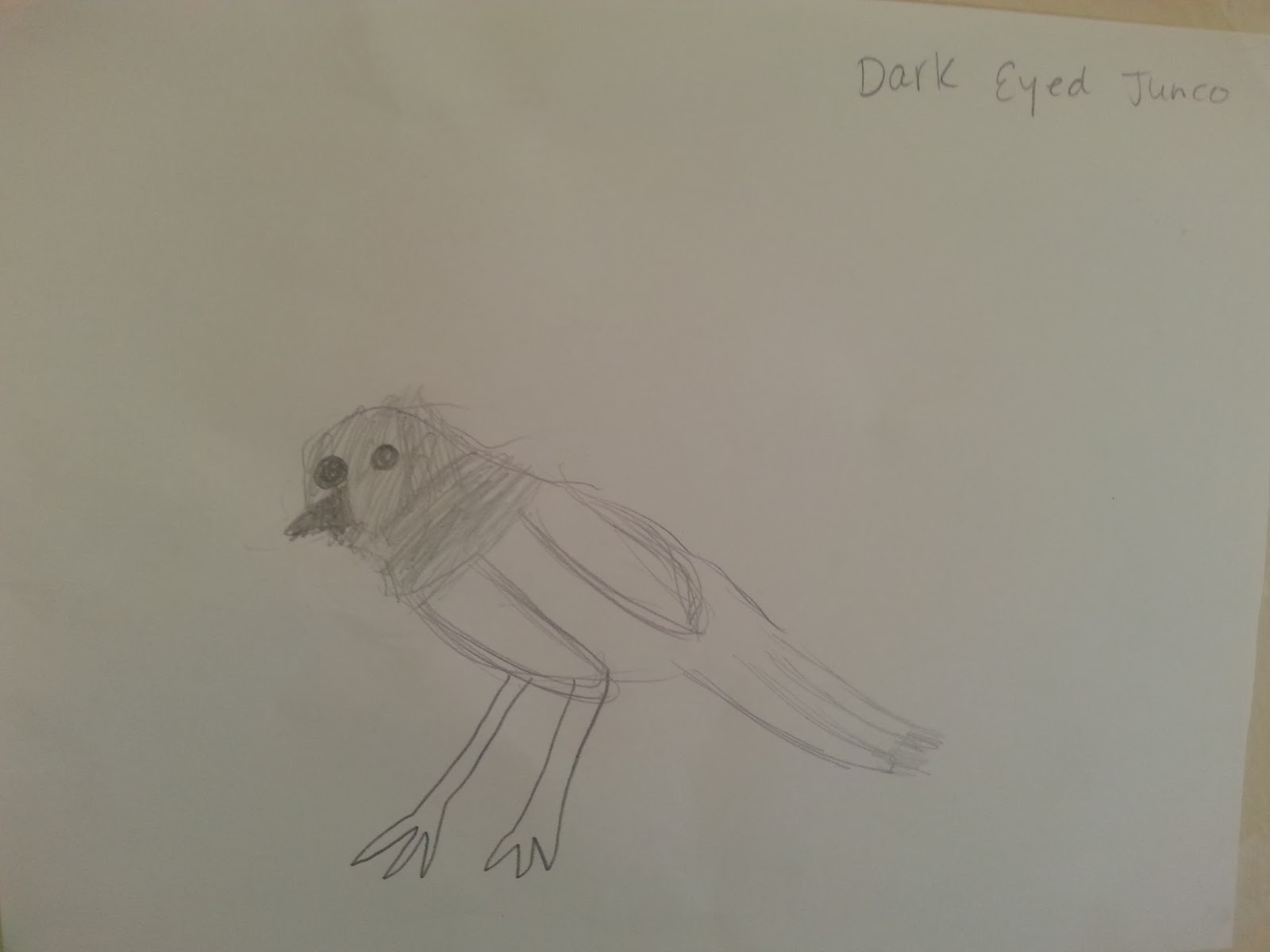
C - 6 years old - He likes to get up early and observe the birds at our feeders.
He old me this picture shows the progression of the bird looking for food
MG's (8) Dark Eyed Junco (lots of these at our feeders right now)
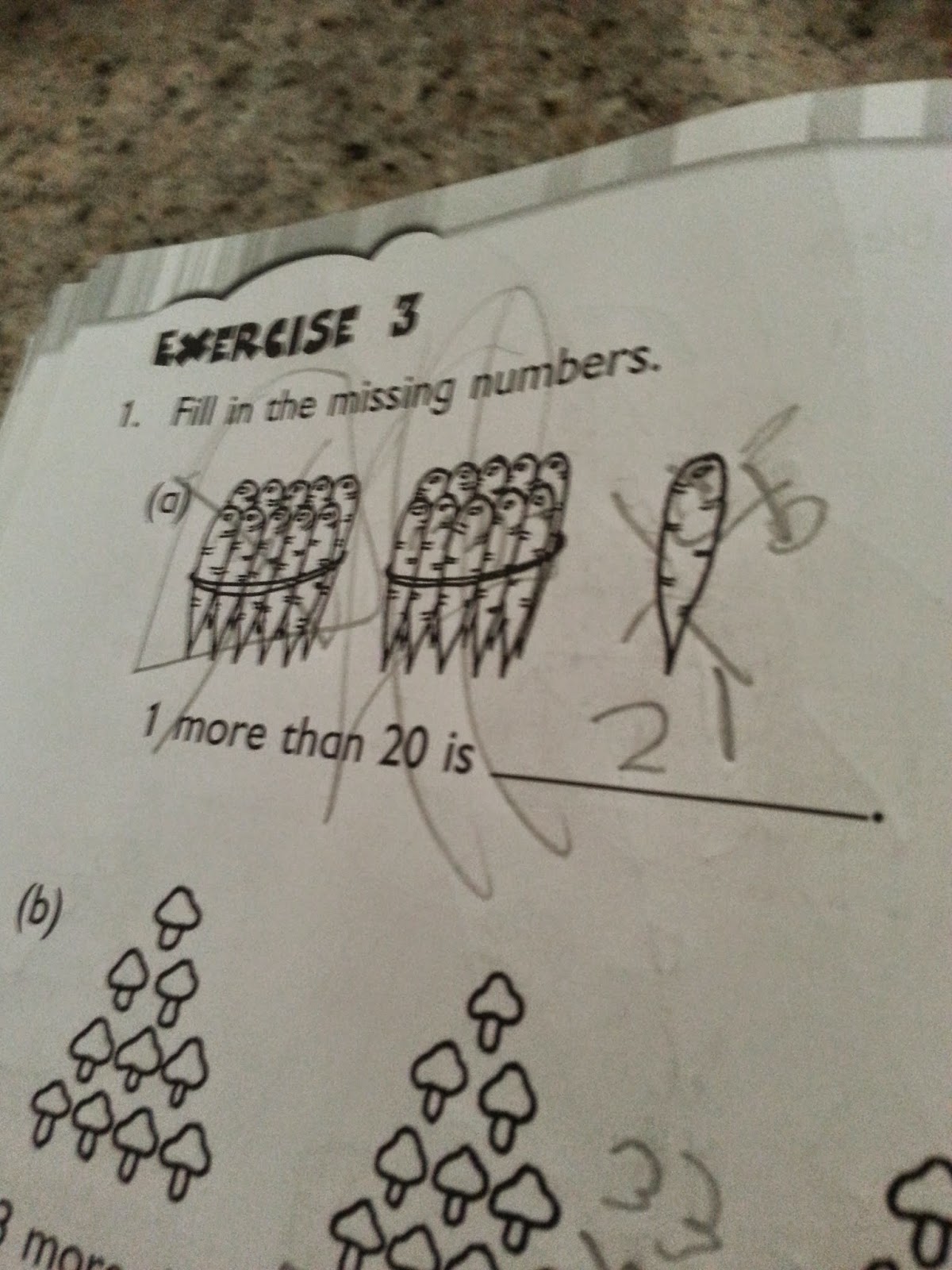
This cracked me up - I looked over to find this on C's math book and his narrating,
"hahah, I have ENSLAVED YOU ALL!"
Not long after, my oldest ran in, exasperated with her writing assignment, saying that she couldn't think of anything to complete them that didn't involve death.
I think I read once that one of the benefits of homeschooling is
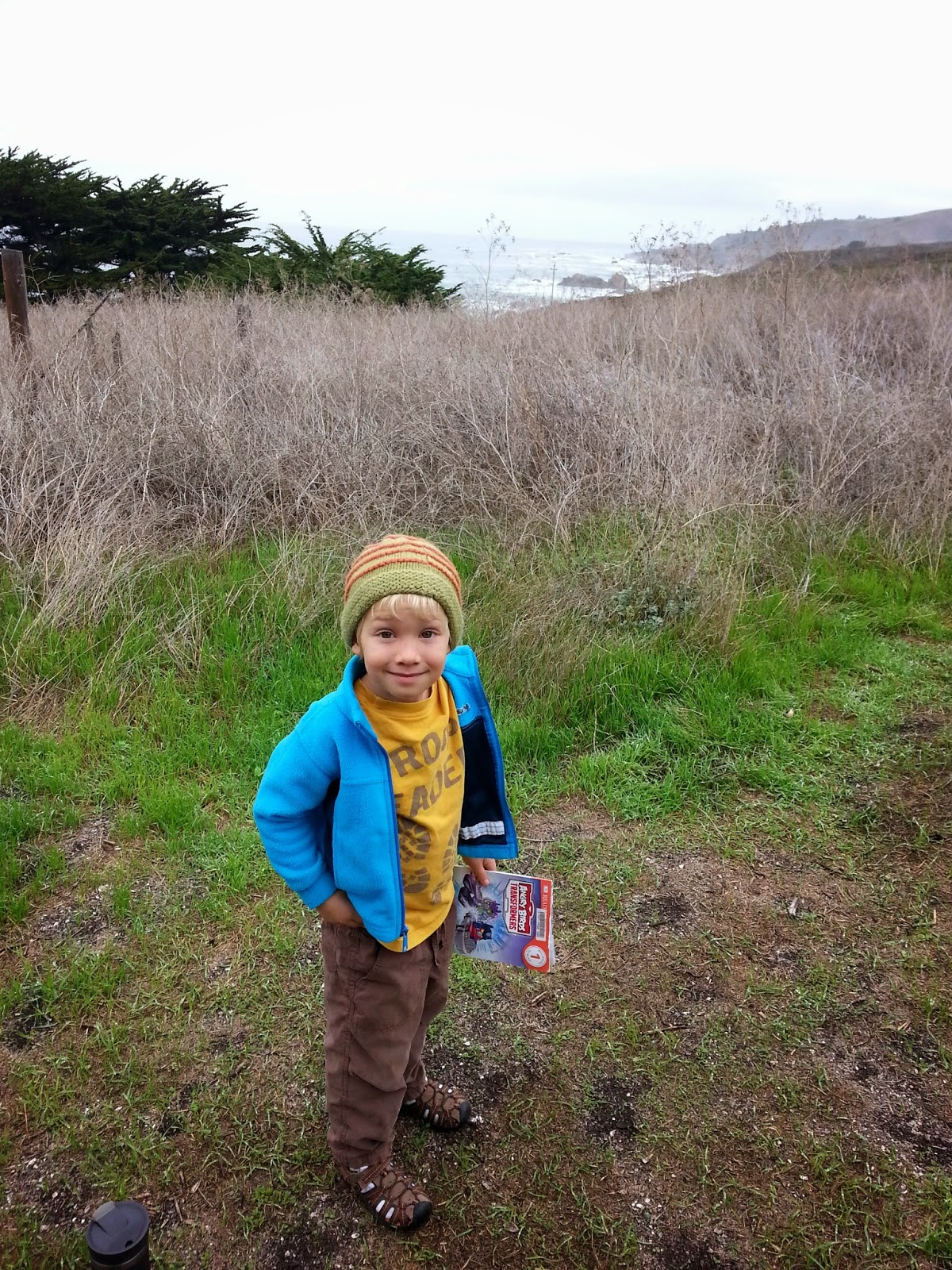
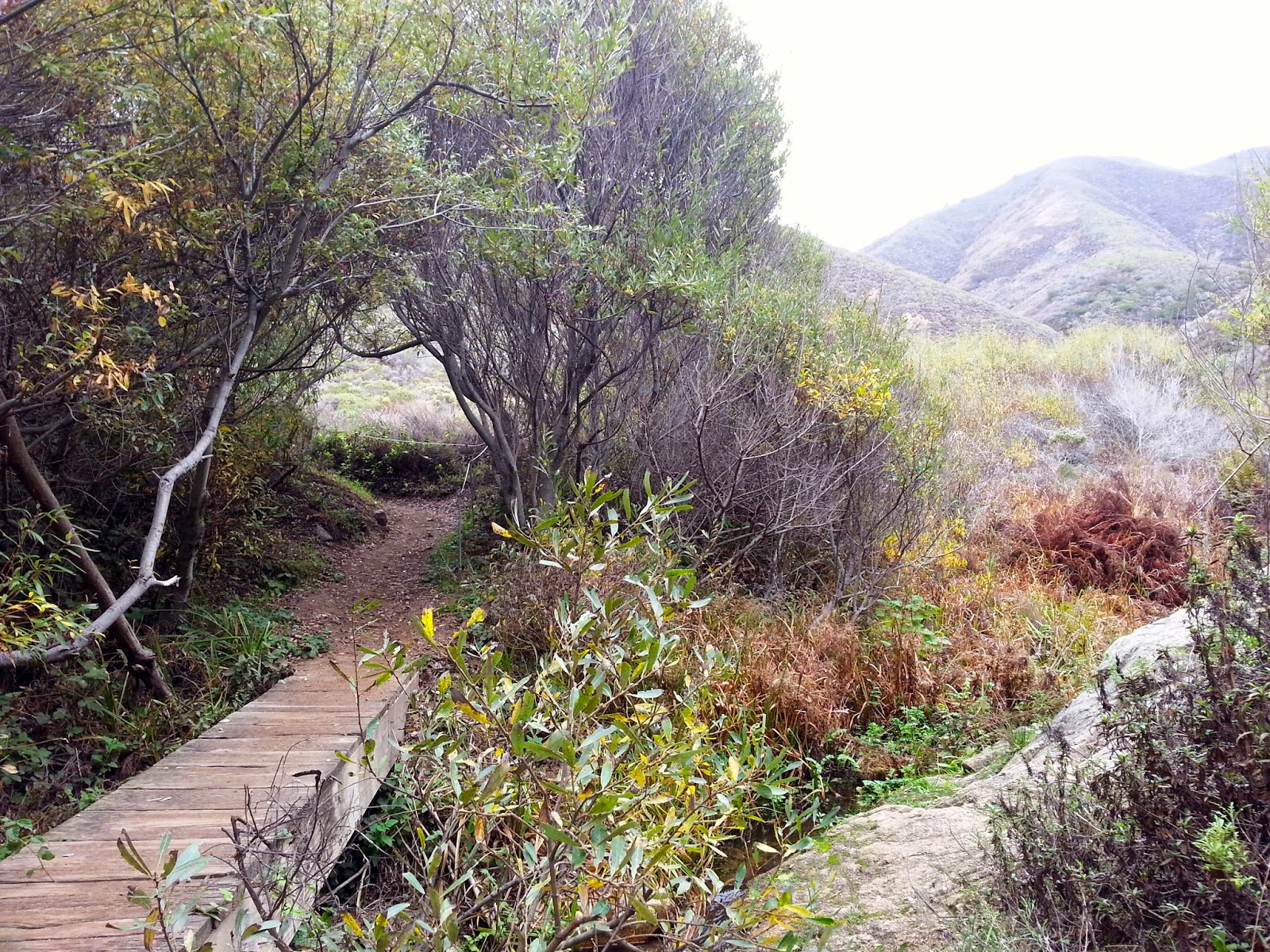
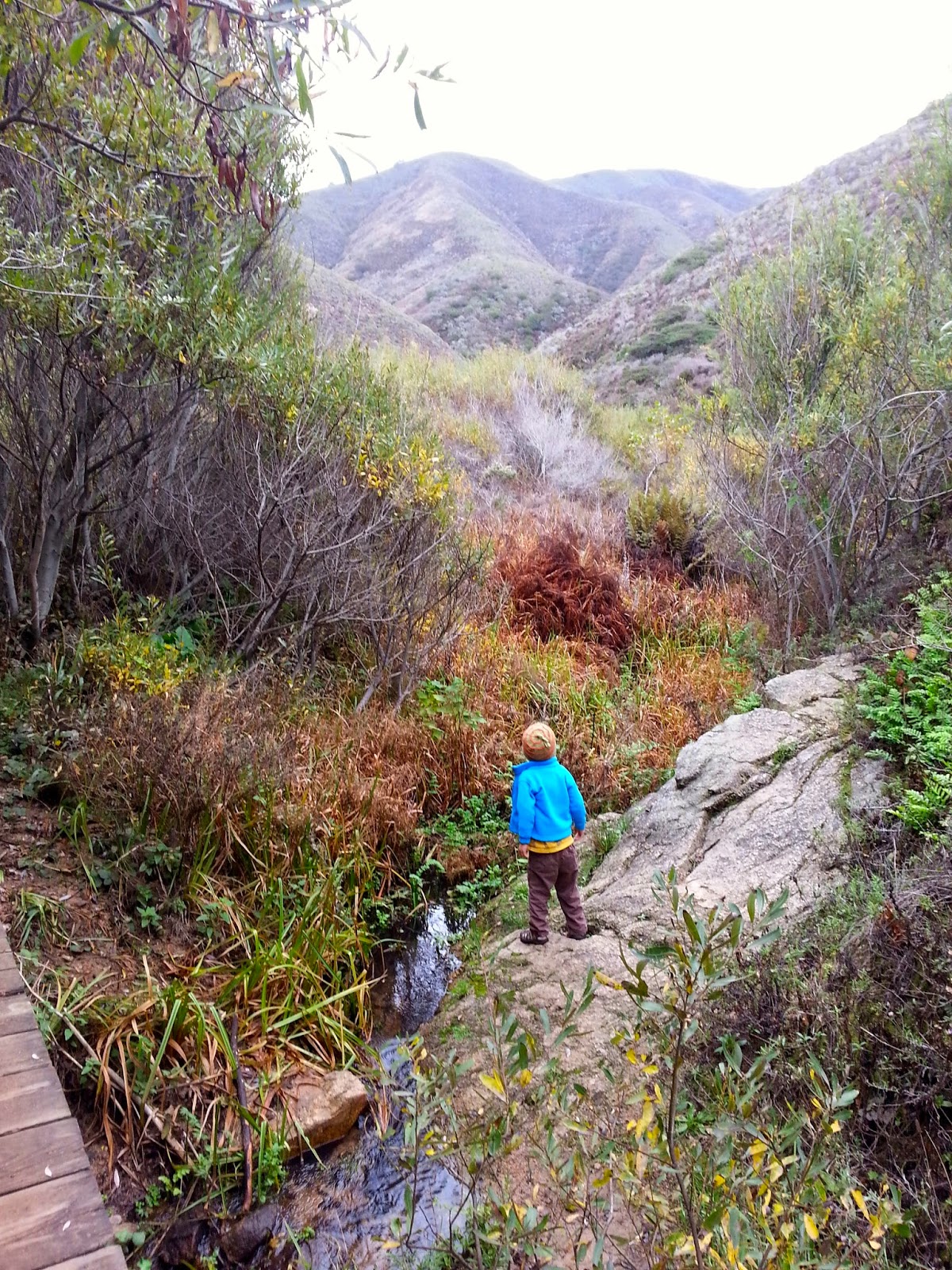
The highlight of the week for me was going to Sobranes Trail, on the north end of Big Sur. While we've been to a lot of Big Sur, I'd never been to this particular area before, and I was enchanted. It was a cool, misty morning - rain threatening for the afternoon, but holding off for us in the morning.
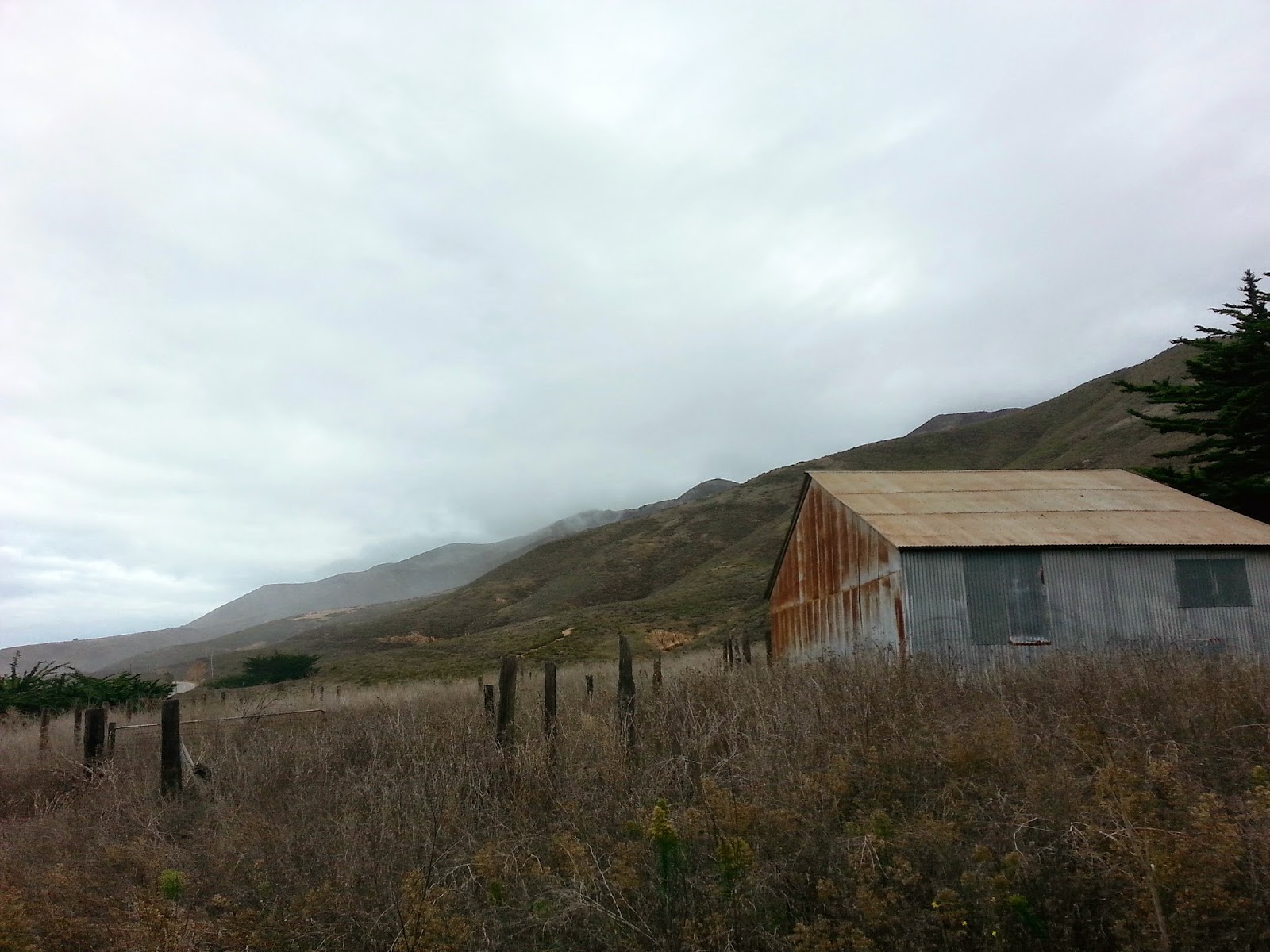
Here is the rusty barn you can see from the highway.
We found a quiet spot right off the trail next to the trail to sit -
I worked on my journal and my little guy had his snack.
What's beyond those mountains?
Jack spotted a dew covered spider web and watched it, looking for its owner
We will be back with the husband unit to do some more serious hiking, since we didn't get very far before having to go back to find and then throughly inspect the port-o-potties (Jack has a mini-obsession).
Other stuff...
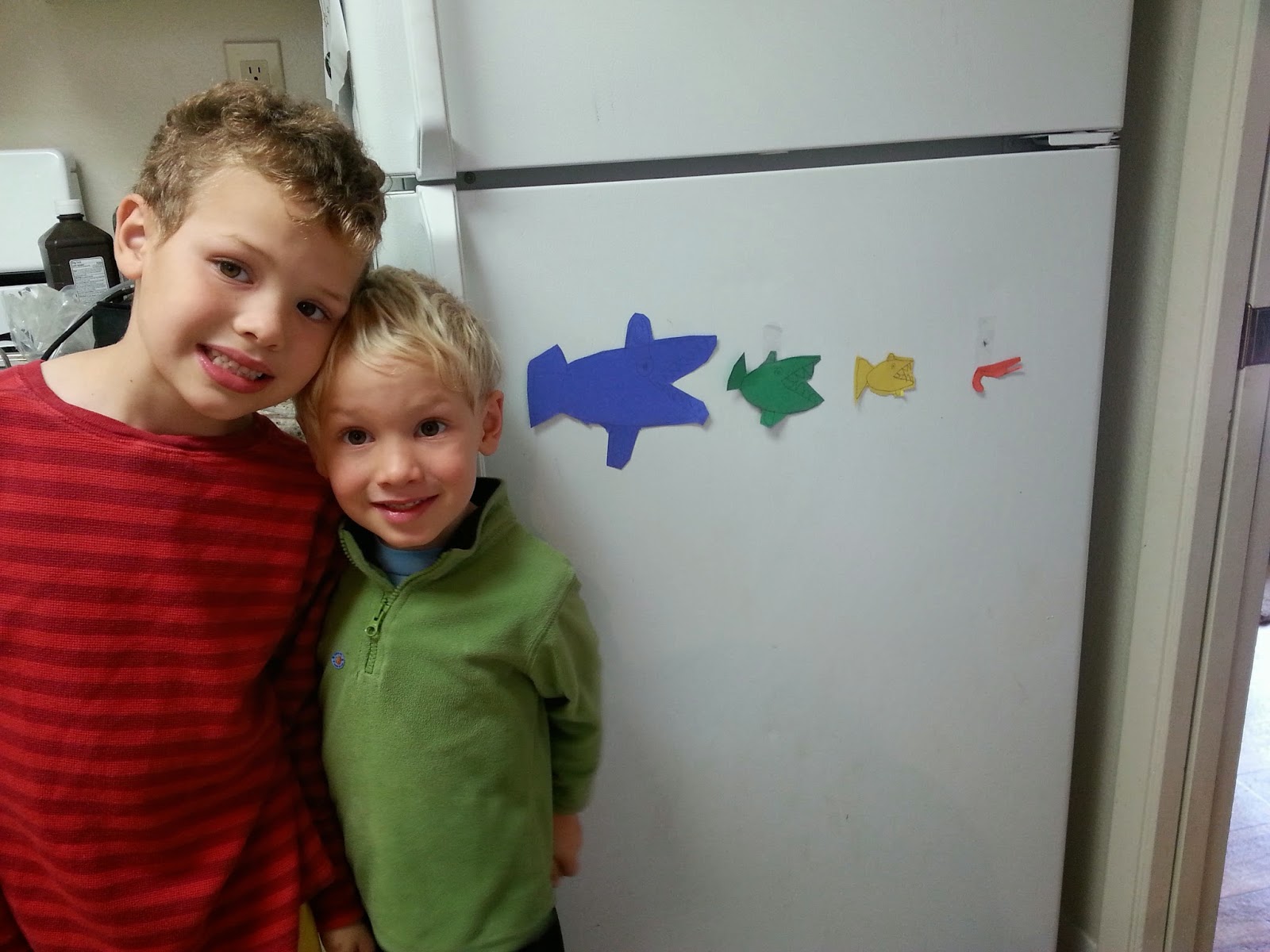
My kitchen has been taken over by a construction paper food chain diorama extravaganza...
or I suppose this is what you could consider pre-k / 1st grade project based learning
(I will, thanks very much, as I sweep up the cuttings).
It started with my four year old seeing a cool mobile of a food chain in a Magic School bus book - he grabbed his big brother and they got to work...
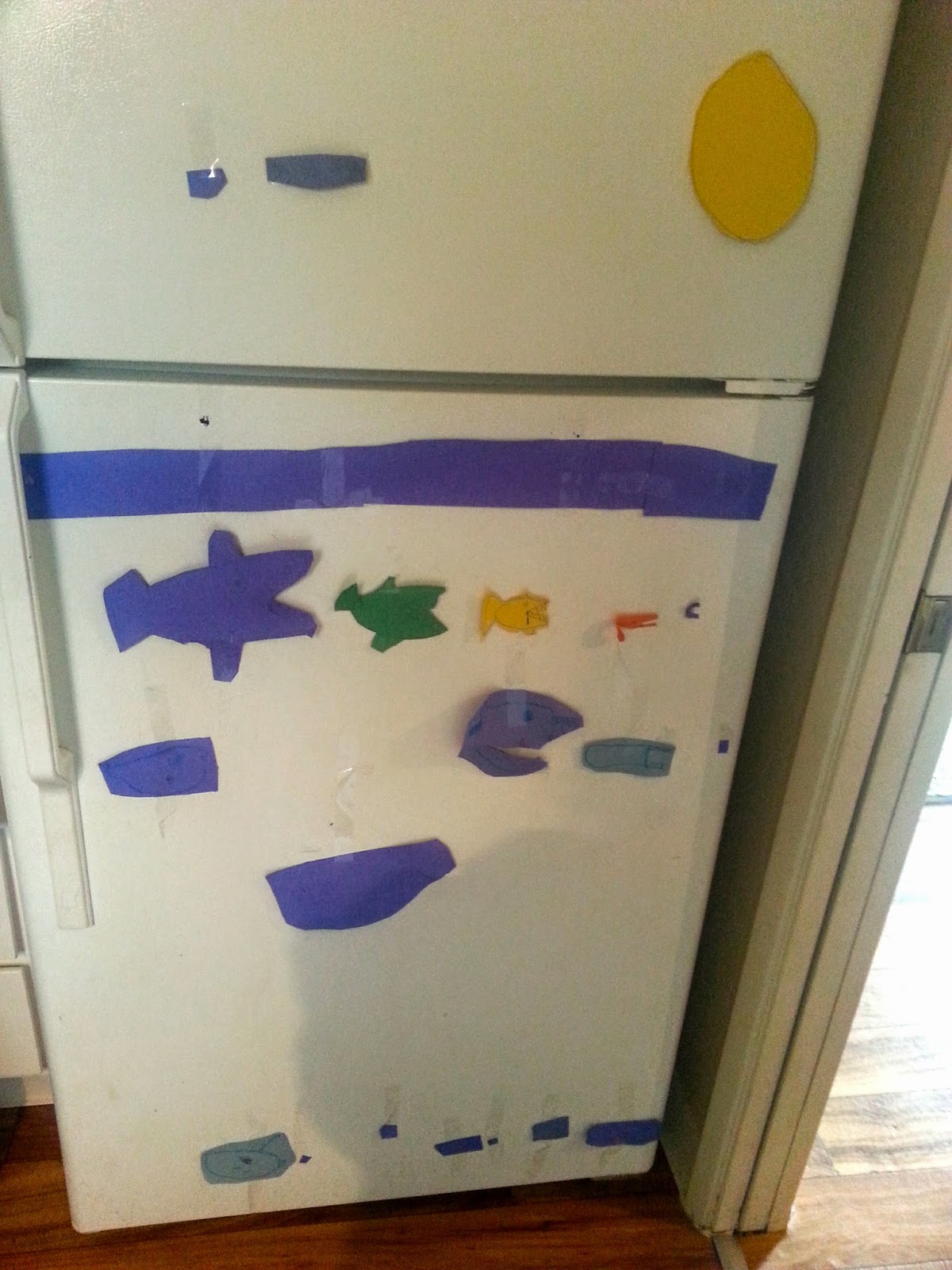
To the point right? NOT ENOUGH!
There was actually more on here before I took the picture, but I had to move it so I could OPEN THE FRIDGE. It was a boat (it has to be on top of the water of course - of course!).
I know, I'm so mean, and totally stifling art, man.
MORE FOOD CHAIN!
Now in my kitchen there is also the human connection - a street lined road with trucks delivering shrimp to stores for people (the apex sea predator) to buy and eat.
Among other things, one burning question the boys had going down the food chain was what does plankton eat? I learned along the way on this project were that phytoplankton use photosynthesis to make their own food (although the boys kept shortening this to THEY EAT THE SUN, which I guess sounds more much more dramatic), while zooplankton eat the phytoplankton. Also see the Angler fish on the bottom? Those eat squid, turtles, and occasionally the very lost seabird.
And this isn't even our official science....
That would be anatomy:
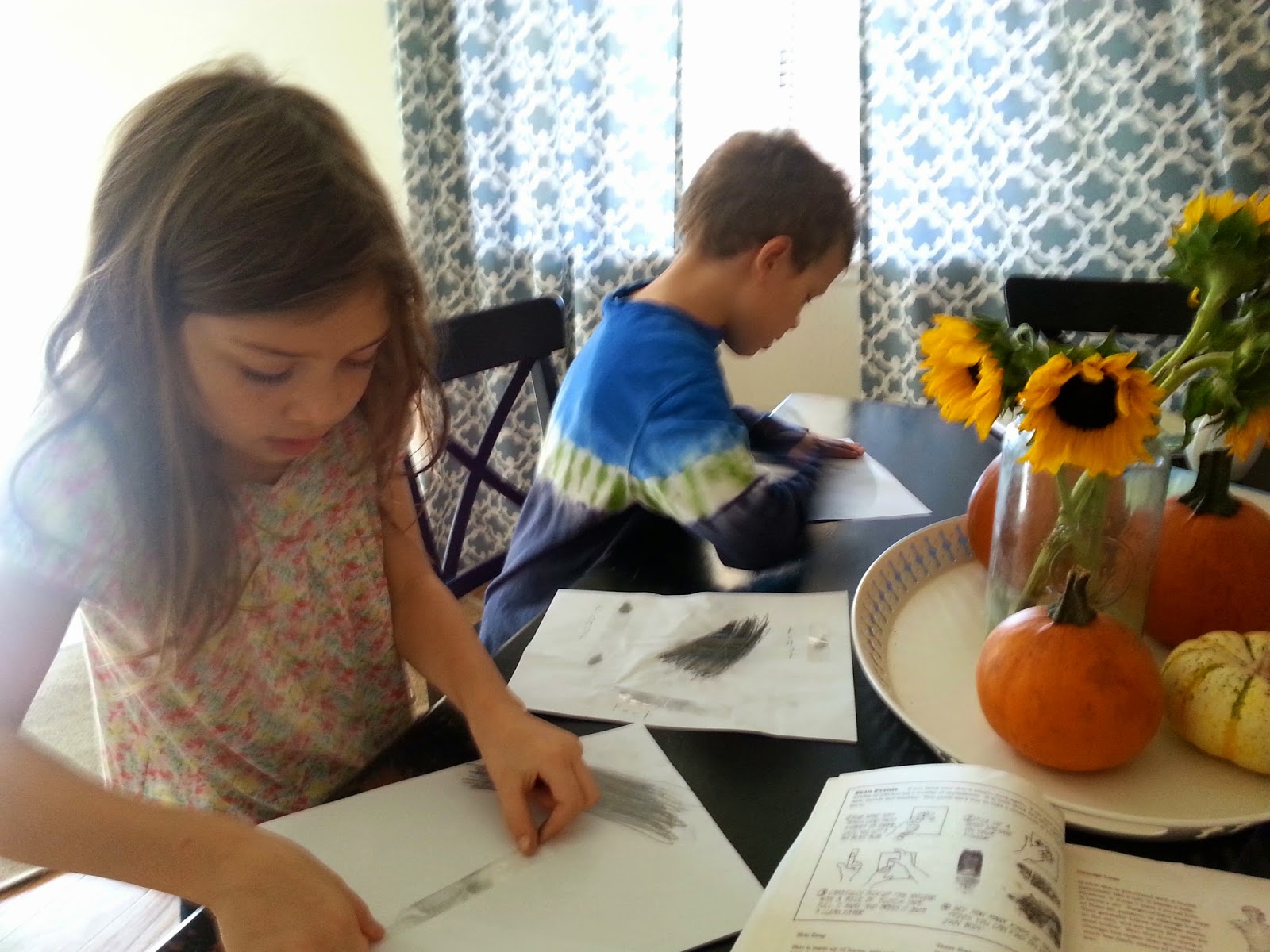
Doing skin rubbings from various body parts
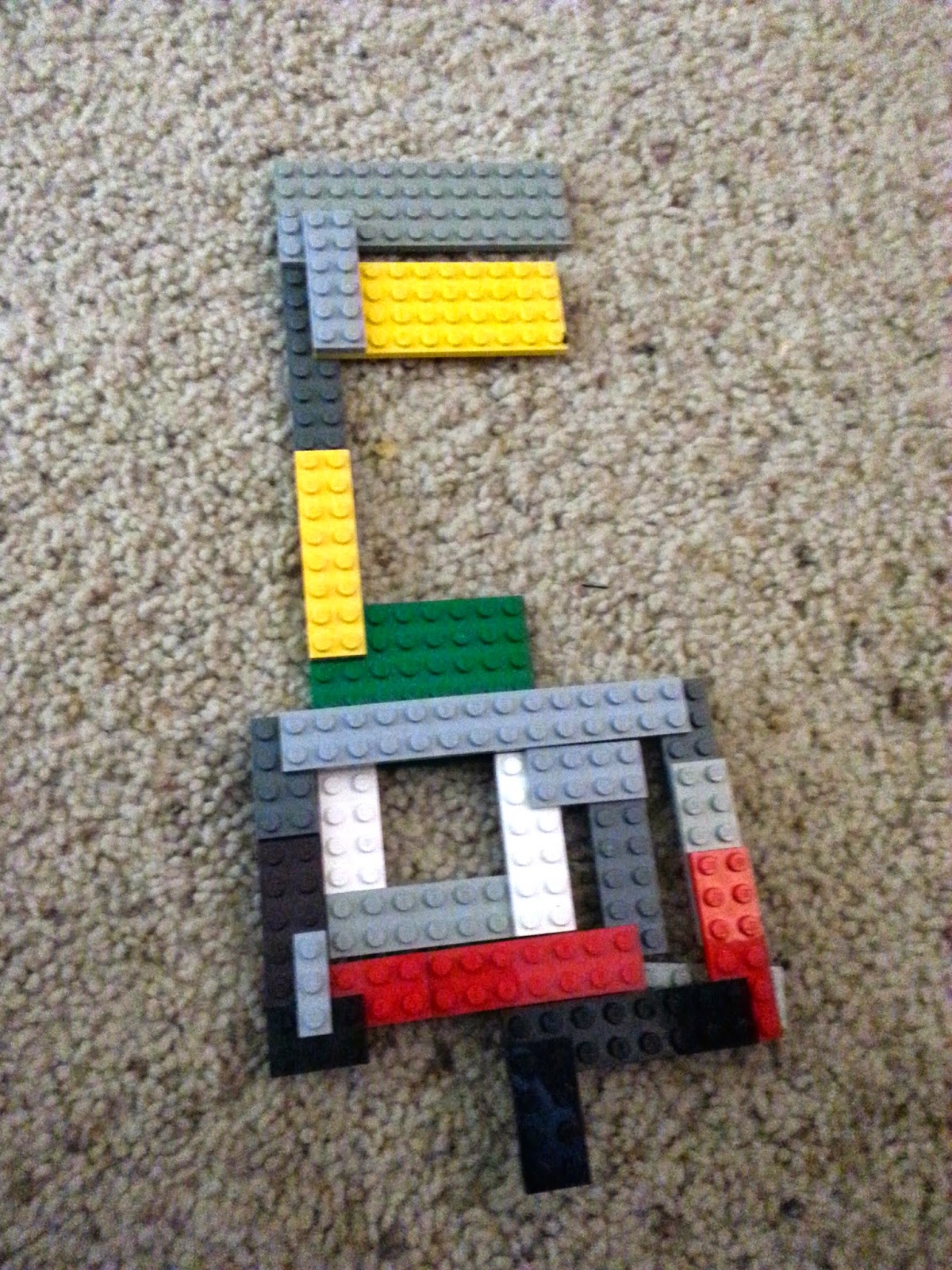
Lego digestive system model
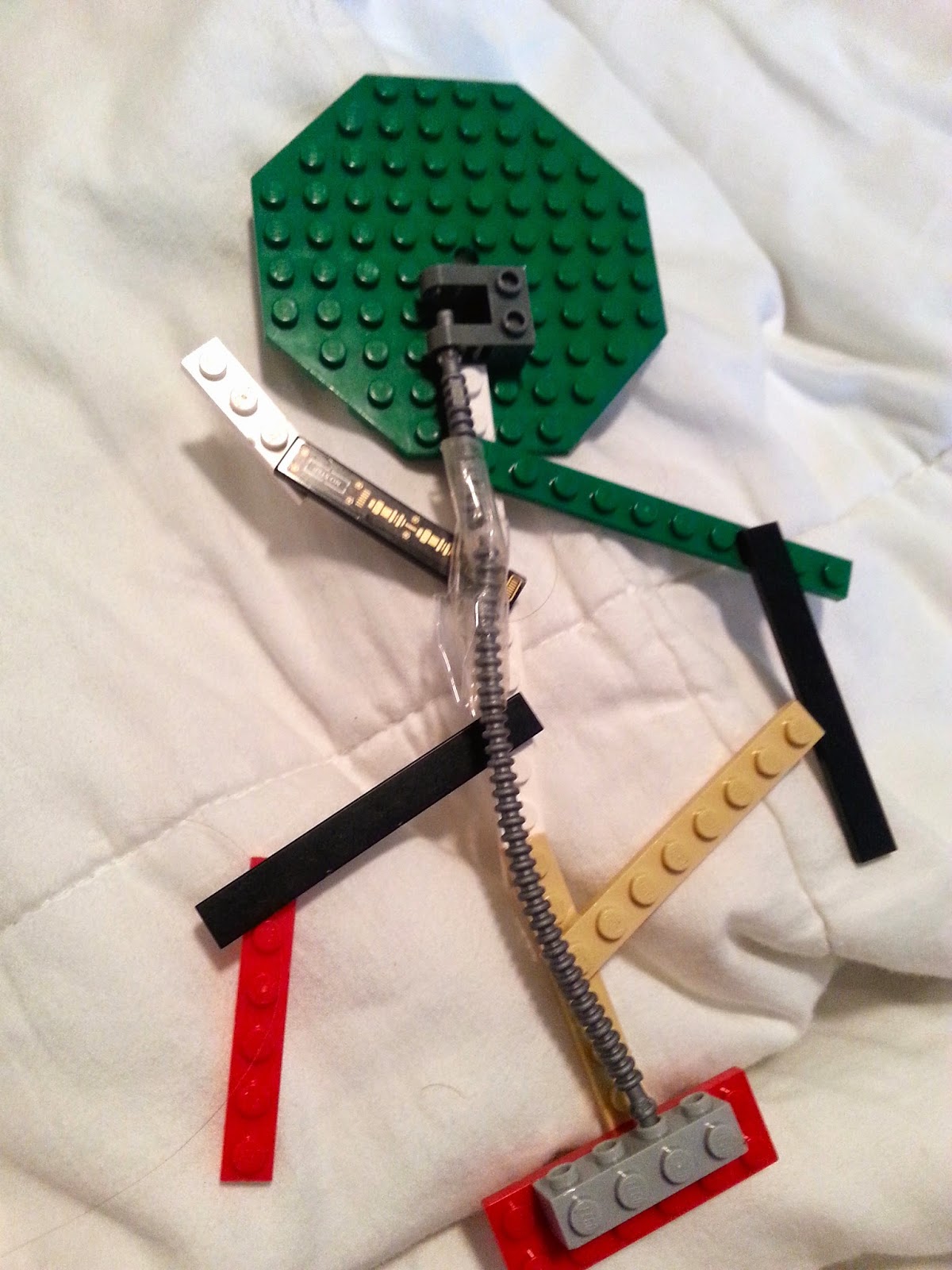
Lego nervous system model (both via my 6 year old)
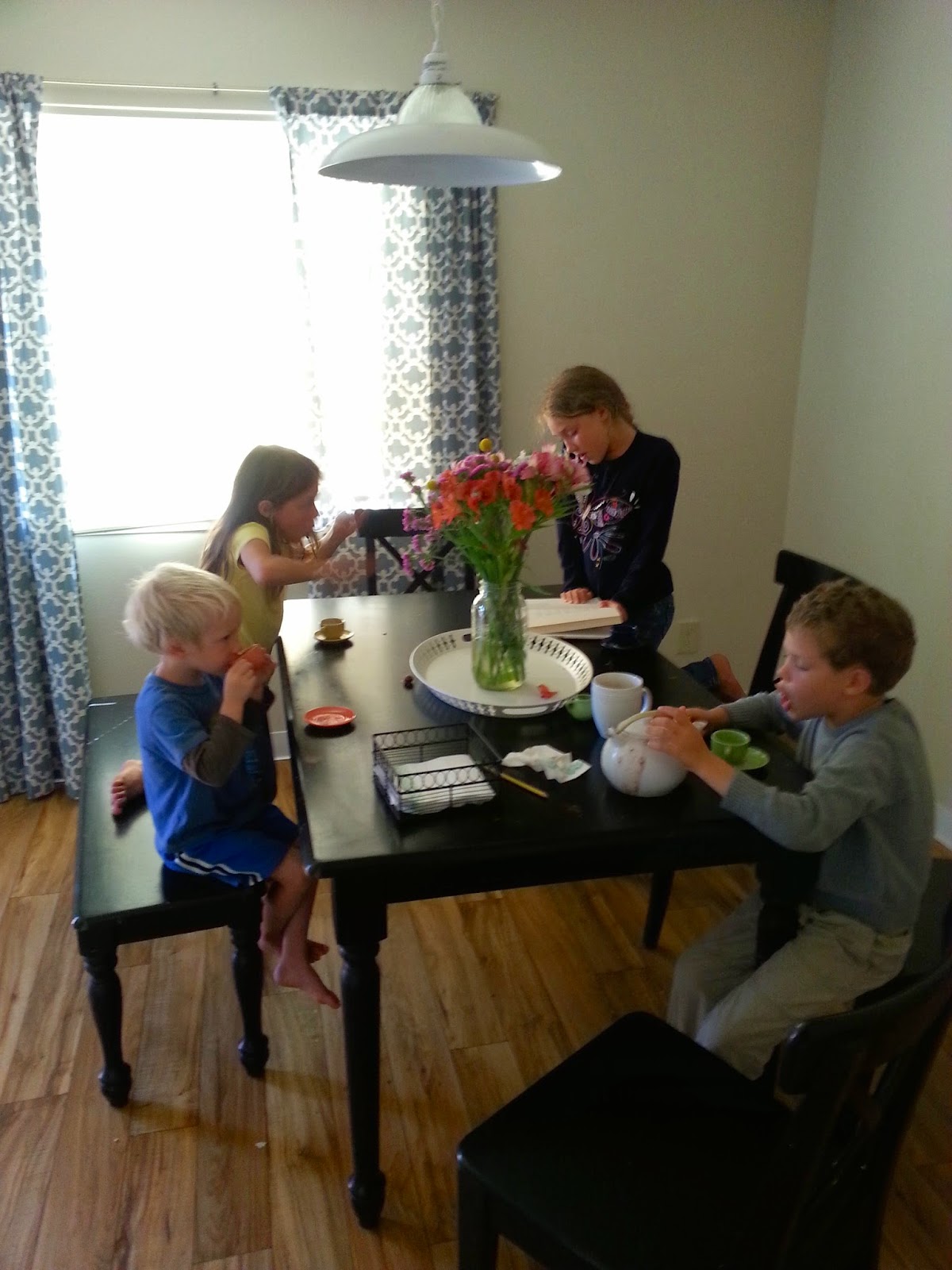
Poetry teatime - keeping it real - yes, it still says "happy halloween" on that board.
My 6 year old observing and drawing the birds at the feeder and listening to the Princess and the Goblin.
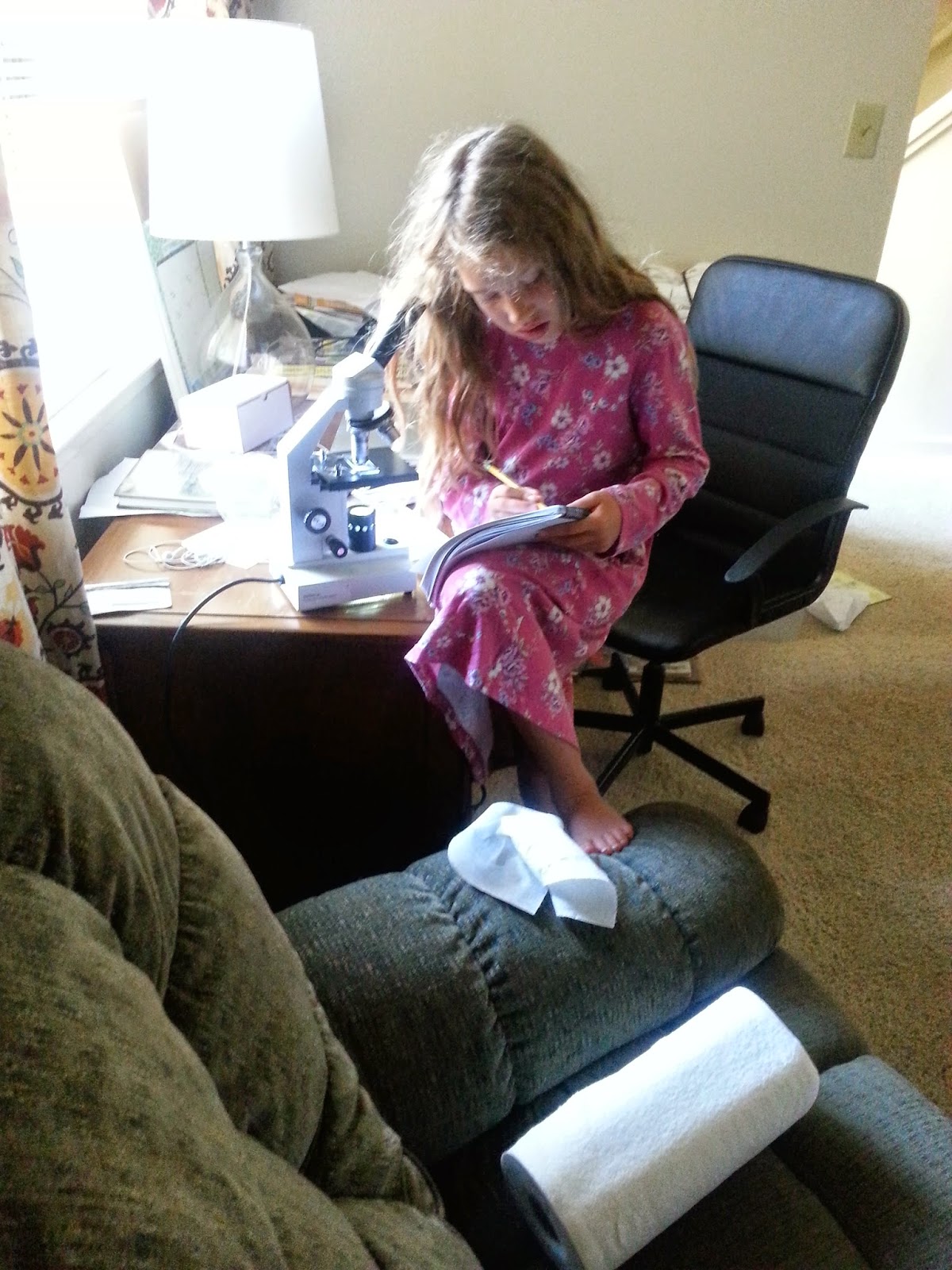
although what has really captured her interest has been the new slides we got for the microscope.
Watching Crash Course videos to go along with our history chapter (thanks for the tip Aunt Jennifer!)
We're trying All About Reading and All About Spelling this fall.
Some of my more advanced readers and spellers are obviously enjoying the letter tile board.
Poetry teatime!
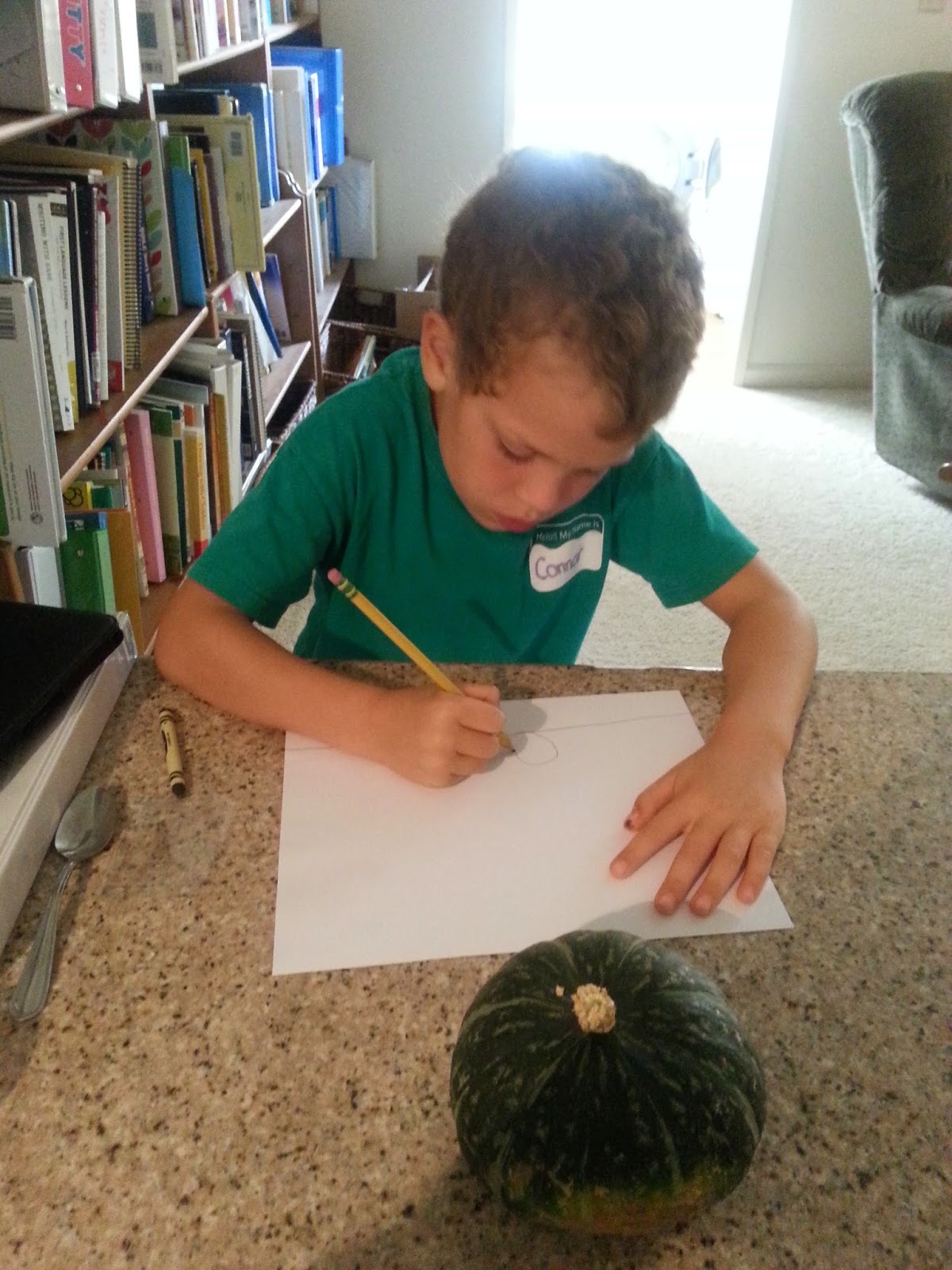
C chose this squash from our CSA box for his still life drawing
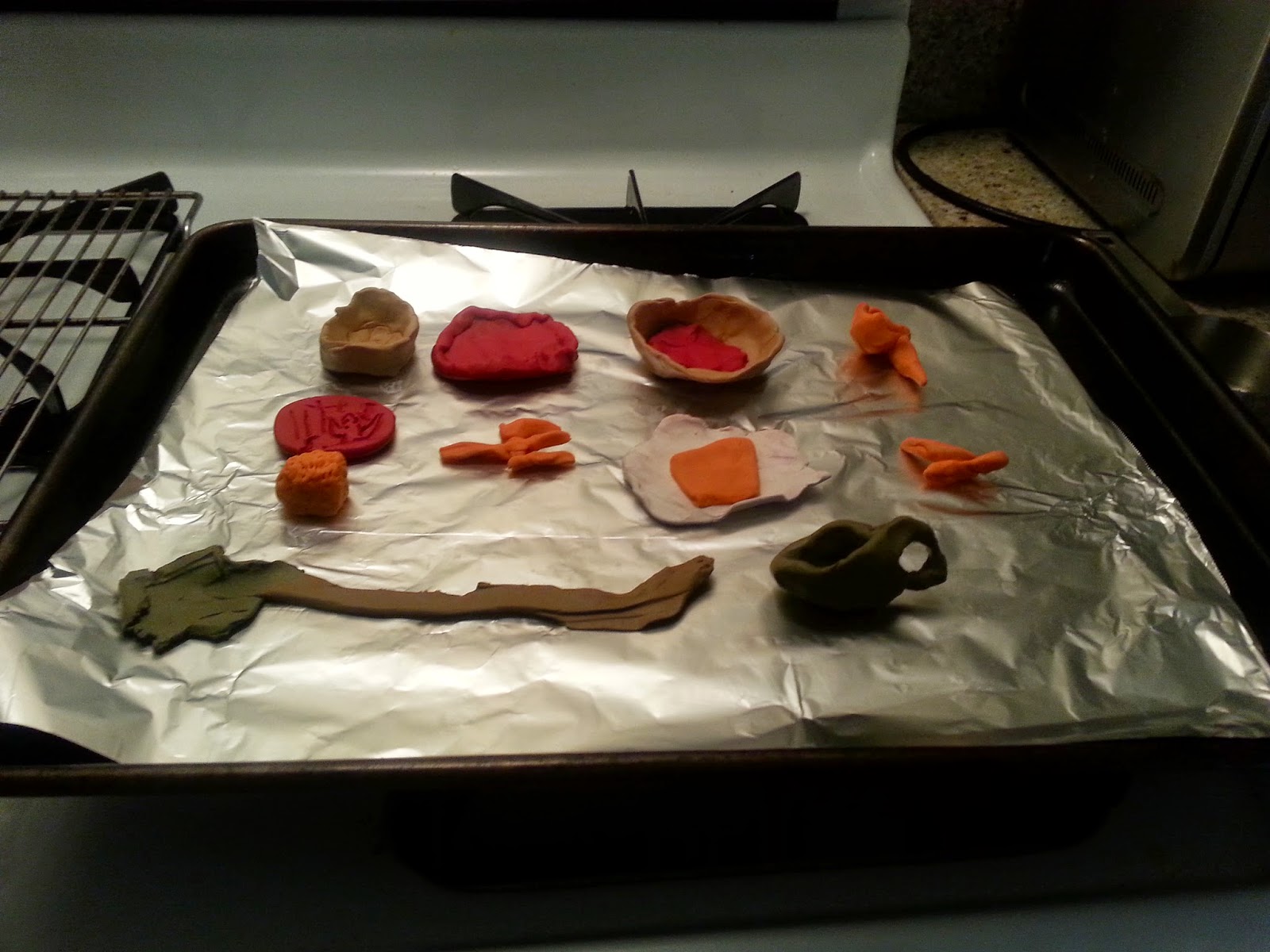
Making sculptures out of Sculpey
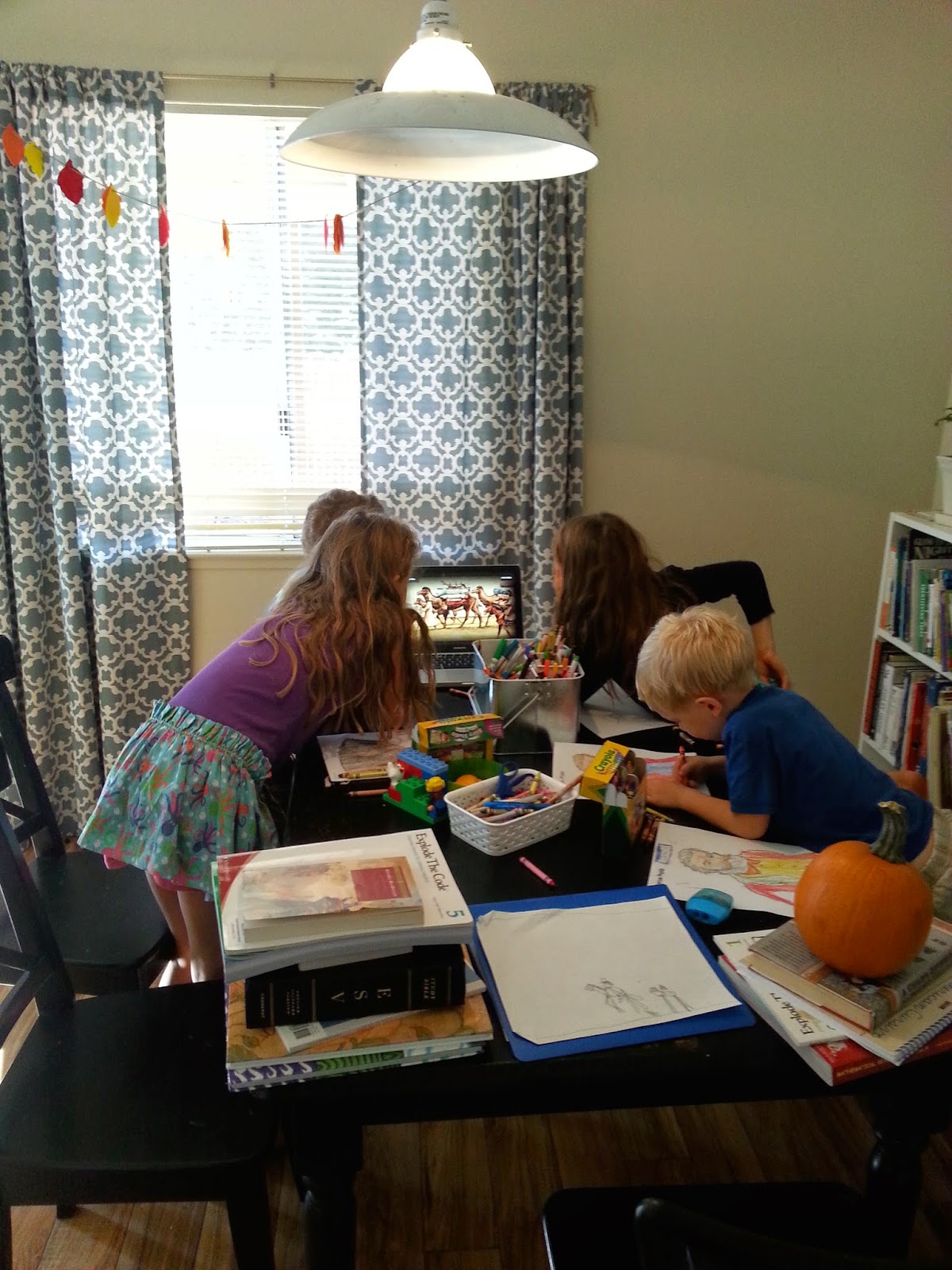
Keeping it real - the table after 4 kids are done with it on a typical day
(the play dough is my pre-K-er's).
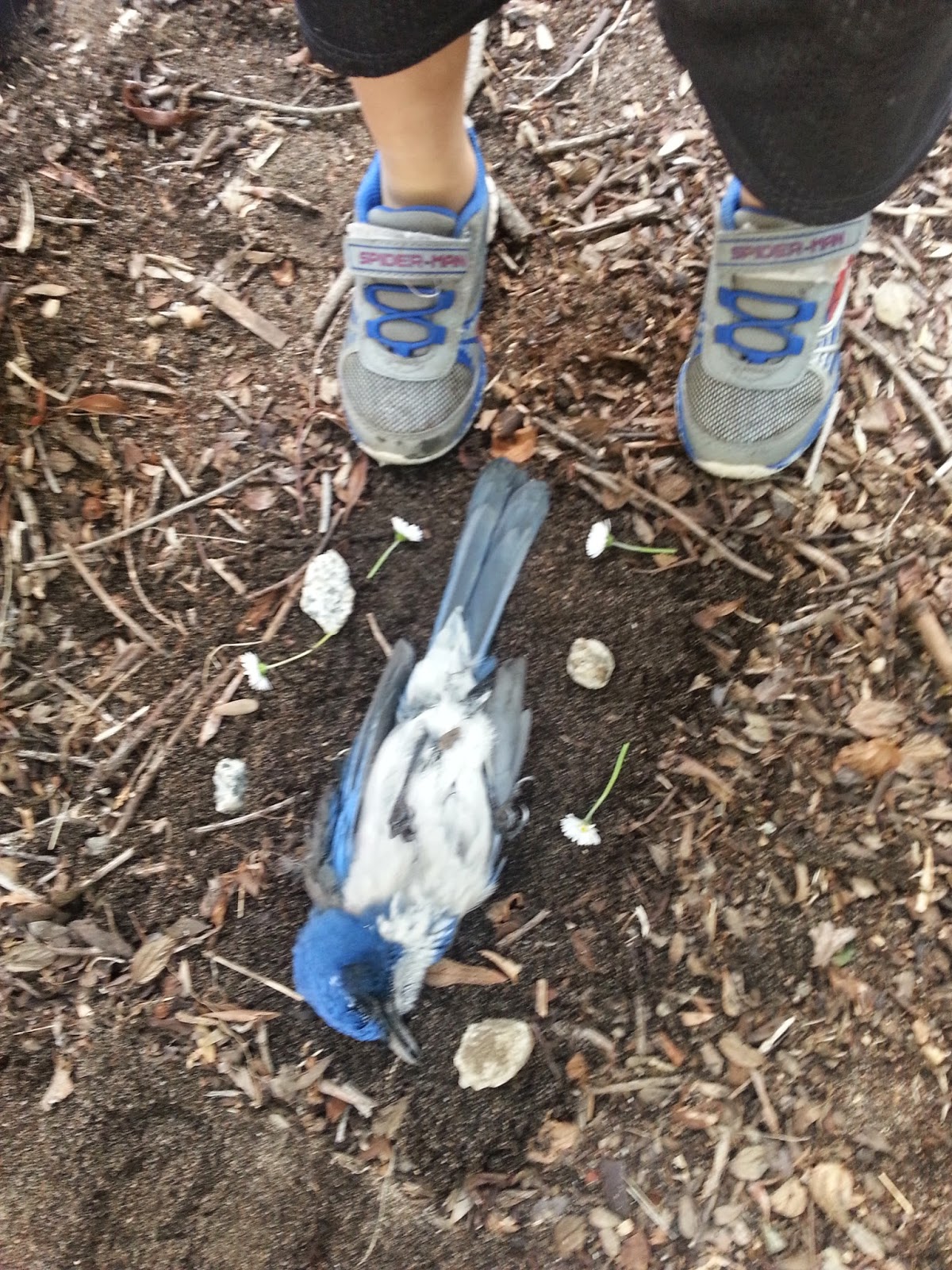
TRIGGER WARNING - dead stuff
I'm touched by my kids reactions to things in nature sometimes. Often when we are out hiking and exploring we come across animal remains, and often the children are interested. At the park they stumbled upon this very newly passed Scrub Jay. The boys and I initially found it, and their reaction was purely scientific, examining as closely as I would let them get, then finally running off. MG disappeared for a time, later to come get me to show me the memorial she had made for the bird:
So we have a pretty awesome library. The space is nice, the collection is excellent, and there are some really amazing librarians. Such as those who come up with events like this: Star Wars Reads.
I know, right?
Come to the library, do some cosplay... you don't feel alone because all the librarians are also dressed up (it was mostly all the younger librarians, go figure ;)
play with some Legos....
do some sing-alongs
(Star Wars themed, of course)
(the same librarian Karl also gave an
awesome dramatic reading from The Strange Case of the Origami Yoda)
But the most awesome item on the agenda started with the making of one's own life saber
(out of a pool noodle and duct tape of course)...
Then, when your light saber done, prepare for your Jedi training session with
Jedi Master Ben Kenobi! Freak out! Well, I freaked out.
Then it got kind of awkward because yeah, Darth Vader also came in to give lessons, and while that doesn't exactly work with the cannon, this guy made up for that by
being super serious and in character.
Eventually the large group proved too unwieldily, and they asked the big kids to sit and wait for a bit, but the bonus was that they eventually got some semi-private Jedi training.
Vader's looking on like, "I need to get those young ones on the dark side like PRONTO."
He told MG that she had much potential for the dark side. Yoikes.
This pic is totally out of focus because Vader was being a total jerk to me.
I was intimidated. I think he was enjoying it. Fun stuff.










.jpg)

